
Meet 2025 PN7, Earth’s Tiny Quasi-Moon
Language
Reading Level
Listen to Article
Alignment
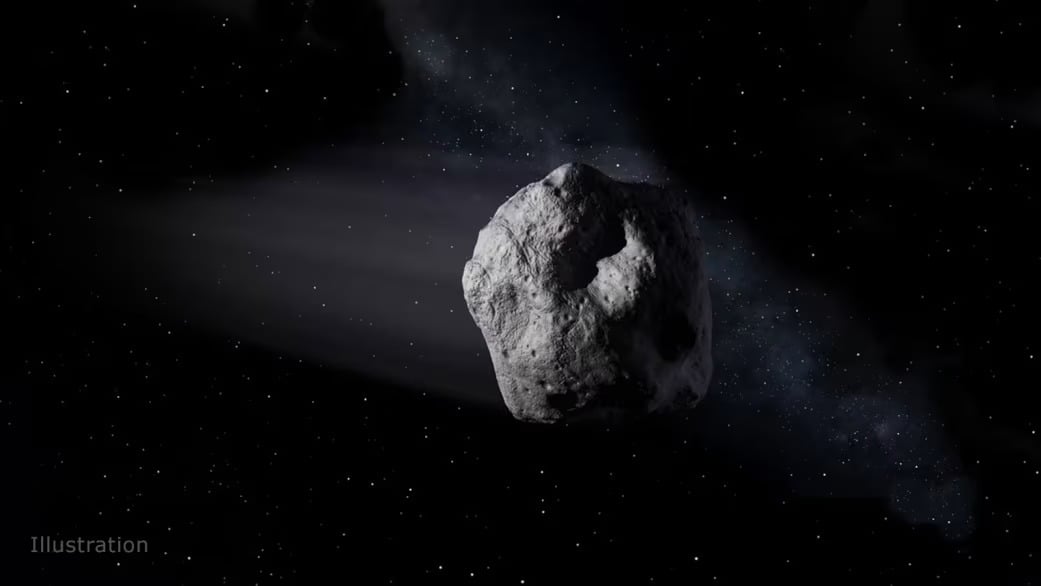
A tiny traveler has joined Earth in its journey around the Sun. The object, named 2025 PN7, is a quasi-moon, an asteroid whose orbit closely matches Earth’s. This makes it look like it follows our planet. The quasi-moon's discovery, revealed on October 22, 2025, offers scientists a rare chance to study near-Earth asteroids.
2025 PN7 was officially discovered on August 2, 2025, with the help of the Pan-STARRS 1 telescope at the Haleakalā Observatory in Hawaii. Astronomers Carlos de la Fuente Marcos and his brother Raúl were surveying the sky when they noticed a speck of light moving against the stars. After weeks of observation, NASA confirmed that Earth had gained a traveling partner.
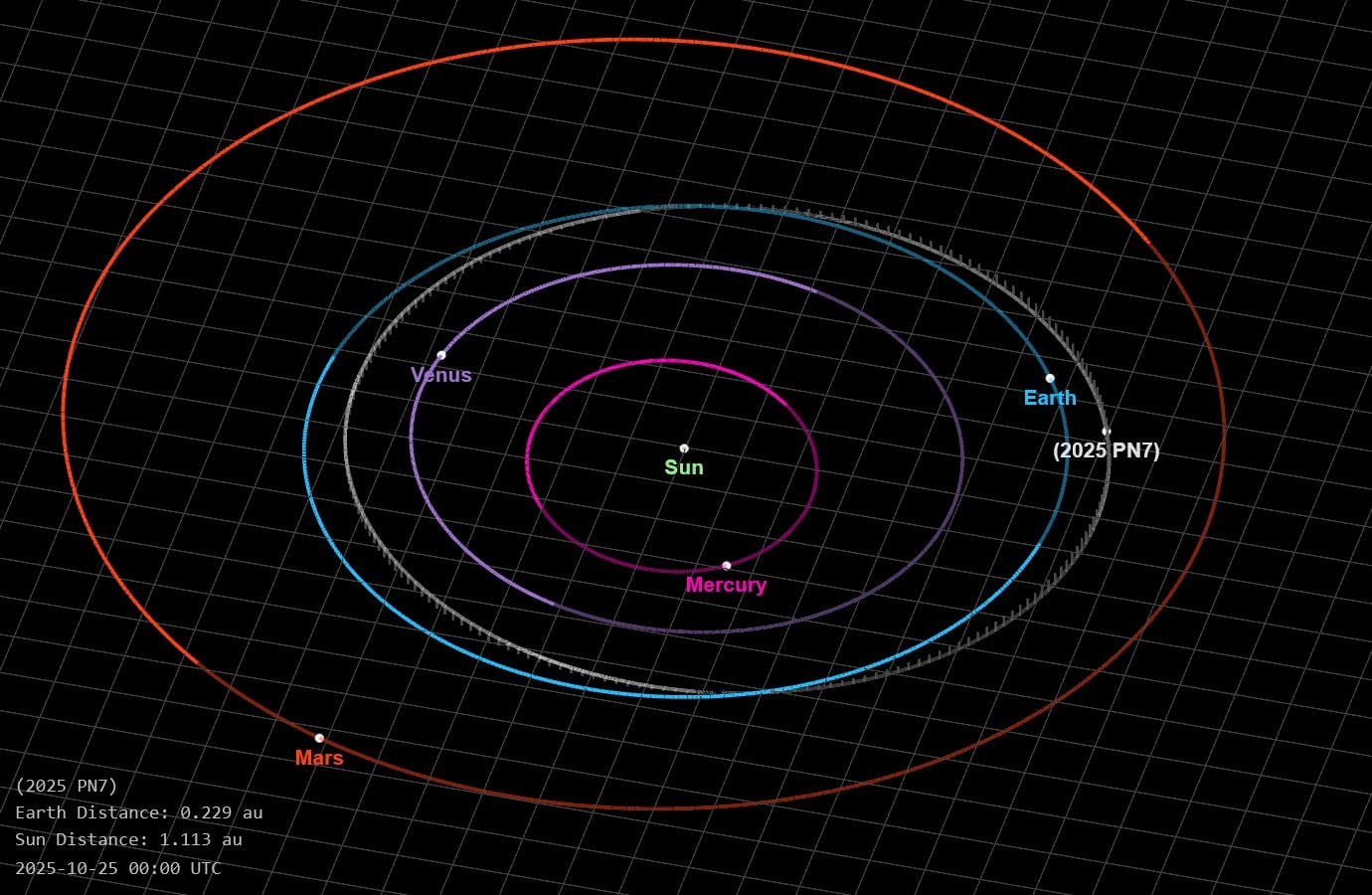
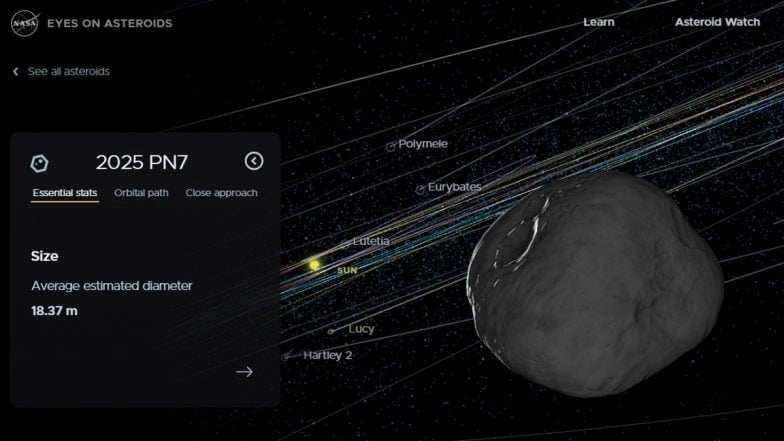
Estimated to be between 62 and 98 feet (19 and 30 m) wide, the asteroid has likely been following Earth for over 60 years. The quasi-moon usually stays about 239,000 miles (384,600 km) away from Earth. But occasionally, it comes within 186,000 miles (299,300 km). That was probably when Carlos and Raúl spotted it.
"It can only be detected by currently available telescopes when it gets close to our planet, as it did this summer," Carlos explained. "Its visibility windows are few and far between. It is a challenging object."
Quasi-moons are not considered true moons because they are not held by Earth’s gravity. Instead, they orbit the Sun along nearly the same path and speed as our planet. This makes them appear to be circling Earth. 2025 PN7 is the smallest of seven quasi-moons discovered around our planet. The tiny space rock is expected to remain near Earth for about another 60 years. Eventually, the Sun’s gravity will pull it into a wider, horseshoe-shaped path, causing it to drift ahead of and behind Earth.
The origin of 2025 PN7 remains a mystery. Its finders believe it belongs to the Arjuna class of asteroids, a group with orbits similar to Earth and other quasi-moons. However, not everyone is convinced. Harvard astrophysicist Avi Loeb and his colleagues suggest it could be debris from the Soviet Zond 1 space probe launched in the 1960s. Fortunately, experts have another 60 years to determine who is right!
Resources: Livscience.com, CNN.com, Medium.com, ZMEscience.com
