
Rare Polar Bear Adoption Documented In Canada
Language
Reading Level
Listen to Article
Alignment
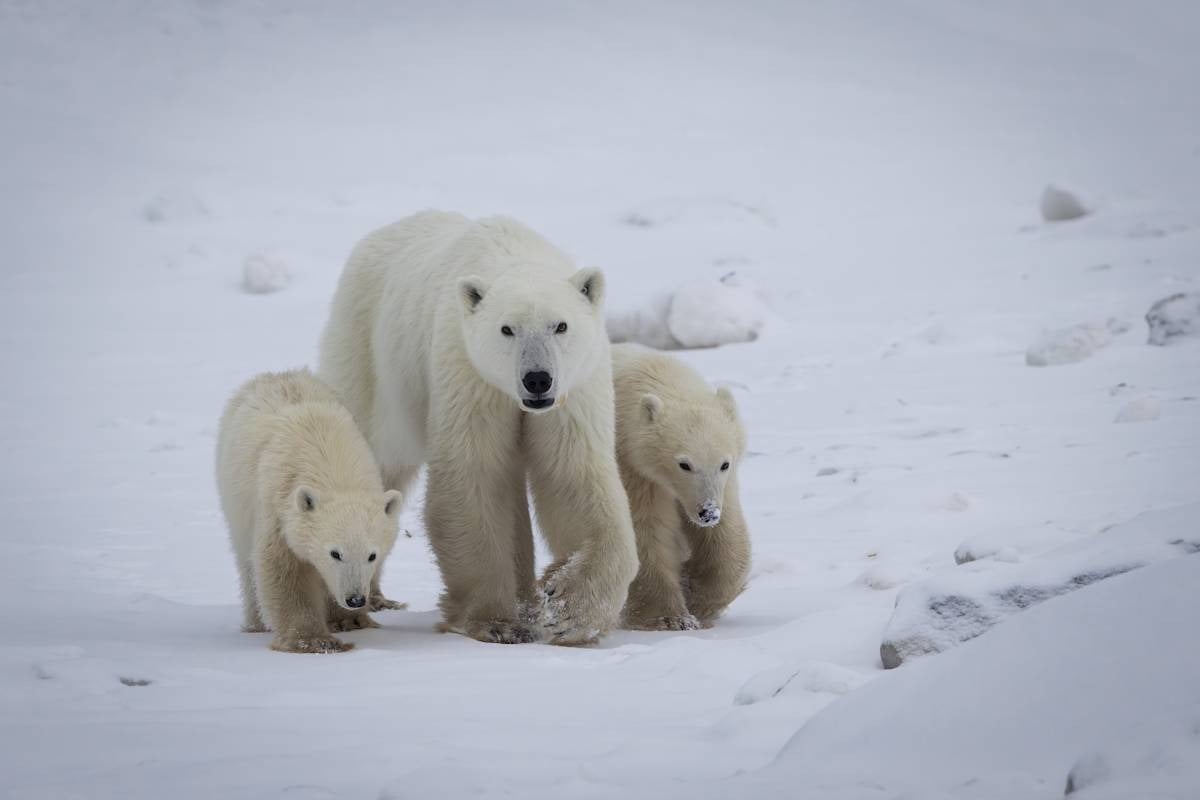
Researchers in Canada confirmed a rare and remarkable event on January 1, 2026. A wild female polar bear had adopted an unrelated cub. The five-year-old mother was identified as bear X33991. She belongs to the Western Hudson Bay polar bear subpopulation in northern Manitoba. The scientists say this is only the 13th known adoption since they began tracking the group 45 years ago.
Tracking bear X33991
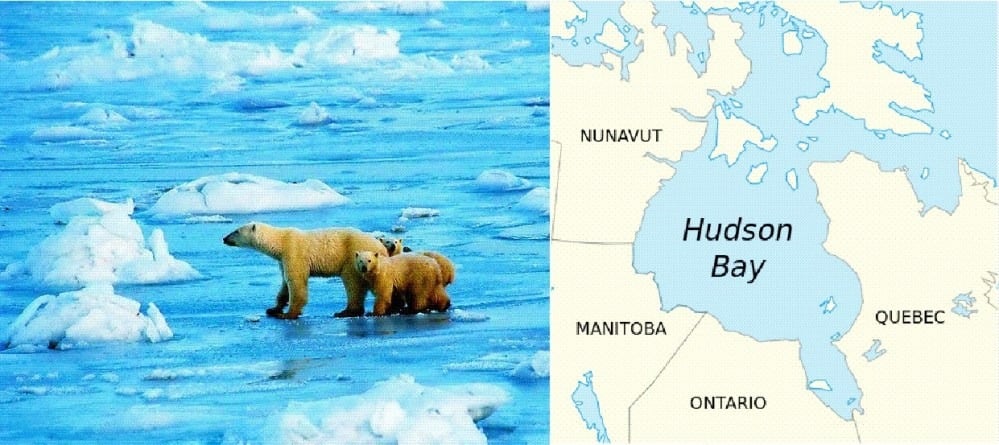
The team from Environment and Climate Change Canada first observed bear X33991 in the spring of 2025. She emerged from her den in Wapusk National Park with a single cub. As part of their ongoing study, the scientists tagged the cub to track its development.
However, when the researchers saw her again in November, bear X33991 was traveling with two cubs of similar age. One carried the tracking tag, while the other was unknown. Suspecting an adoption, the researchers conducted a DNA analysis. Sure enough, the second cub was not the biological offspring of bear X33991.
Search for the biological mother
The researchers are now reviewing their extensive genetic database to identify the cub’s biological mother. If she is still alive, it would suggest a "litter swap." This rare event occurs when cubs are accidentally exchanged in areas where many bears gather. If the DNA matches a female that has not been seen recently, she may have died. This would make the cub a true orphan.
Crossing the ice
Meanwhile, since November, bear X33991 has led the two cubs on a long trek of more than 497 miles (800 km) across the newly formed sea ice of Hudson Bay. This journey is part of an annual migration. As the bay freezes each winter, polar bears move from shore to hunt seals that live under the ice.
Bear X33991 must catch enough seals to sustain herself and produce milk for both cubs. She also has to teach them how to hunt by waiting for seals to surface at breathing holes hidden beneath the snow.
Despite supporting an extra cub, recent drone footage shows that all three bears are in good condition. This is encouraging since only three of the twelve previously known adopted cubs in this region survived to adulthood.
Polar bears in a changing world
Polar bears are the largest bears in the world. Their thick layer of fat and waterproof coat lets them survive in freezing temperatures. Scientists estimate there are about 31,000 polar bears spread across the Arctic. However, their survival is increasingly threatened as melting sea ice makes hunting and breeding more difficult. The adoption by bear X33991 is a rare success, but the long-term survival of the species depends on preserving the frozen habitat they call home.
Resources: Smithsonianmag.com, polarbearsinternational.org, BBC.com
