
Michaela Benthaus Makes History As First Wheelchair User In Space
Language
Reading Level
Listen to Article
Alignment
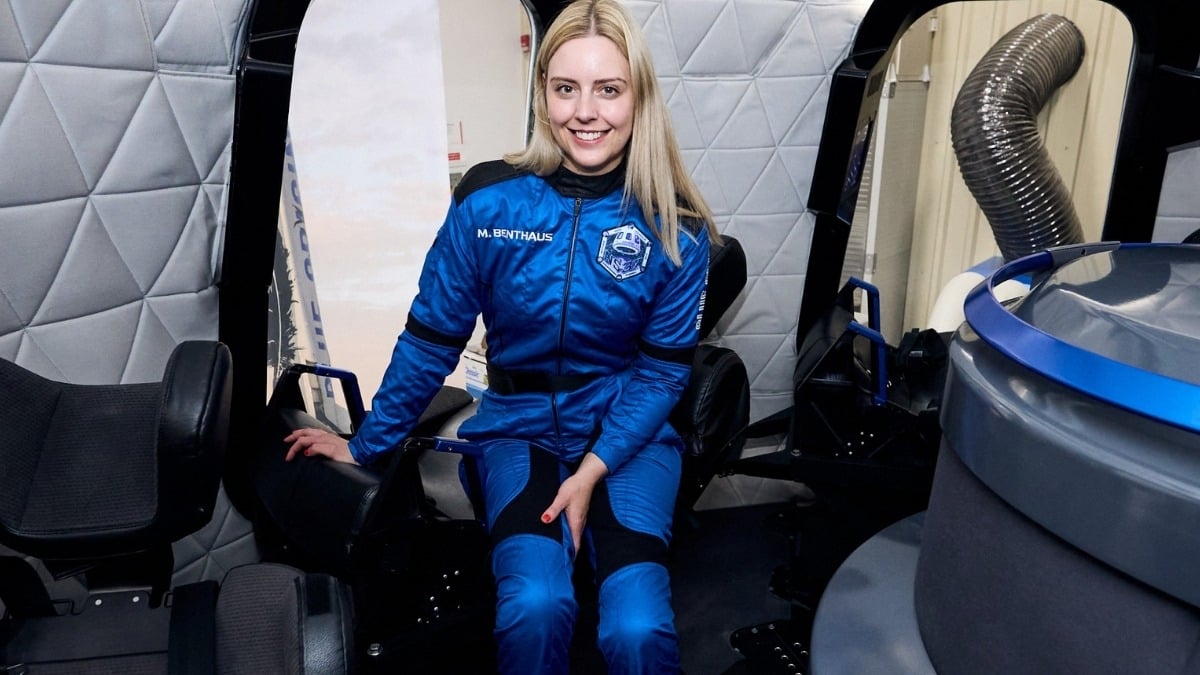
On December 20, 2025, Michaela "Michi" Benthaus became the first person in a wheelchair to travel to space. The 33-year-old German aerospace engineer launched from West Texas aboard Blue Origin’s New Shepard NS-37 spacecraft. Her flight marked an important step toward making space travel more accessible to people with physical disabilities.
New Shepard is designed for suborbital flights. It reaches about 62 miles (100 km) above Earth, crossing the Kármán line. This is widely recognized as the edge of space. At that height, passengers unbuckle their seatbelts. They float in weightlessness for a few minutes enjoying the view of Earth. The spacecraft then returns to the ground using parachutes. It lands upright on a pad about two miles (3.2 km) north of the launch site. The entire trip, from liftoff to landing, takes about 11 minutes.
To make the flight possible for Michaela, Blue Origin added a transfer platform to help her move into her seat. Her legs were secured with a strap so they would not drift in microgravity. This allowed Michaela to float safely during the weightless portion of the flight.
"It was the coolest experience ever, honestly," she later said. "I think you should never give up on your dreams."
Michaela had dreamt of being an astronaut since a young age. However, in 2018, a mountain biking accident caused a serious spinal cord injury, leaving her in a wheelchair. But that did not stop her from continuing her studies in engineering and aerospace technology. In 2024, she joined the European Space Agency’s (ESA) graduate trainee program in the Netherlands.
Even with her qualifications, Michaela knew becoming a traditional astronaut would be very hard. In late 2024, she contacted Hans Koenigsmann, a retired aerospace engineer. She asked him if people with physical disabilities like hers could be astronauts.
To make it happen, Hans contacted Blue Origin and organized the trip, which he also joined. Blue Origin did not reveal the cost, though a similar journey with a rival company runs about $600,000 per person. The crew also included a scientist, a business executive, a mining engineer, and a software engineer.

Michaela's flight highlights growing efforts to make human spaceflight more inclusive. As part of its Fly! program, the ESA has medically cleared John McFall, who has a prosthetic leg, for a future mission to the International Space Station (ISS). Though no launch date has been set, John could become the first astronaut with a physical disability to stay aboard the ISS.
Resources: Smithsonianmag.com, CNN.com, BBC.com, Guardian.com
